On October 12, at the MILA seminar “Education in the Age of AI: What is Changing and What Needs to Change?”, experts shared AI solutions created in Latvia to support students, teachers, and school management. One of the main conclusions is that these solutions should be mutually complementary and integrated into the systems used in schools to make them more convenient to use on a daily basis.
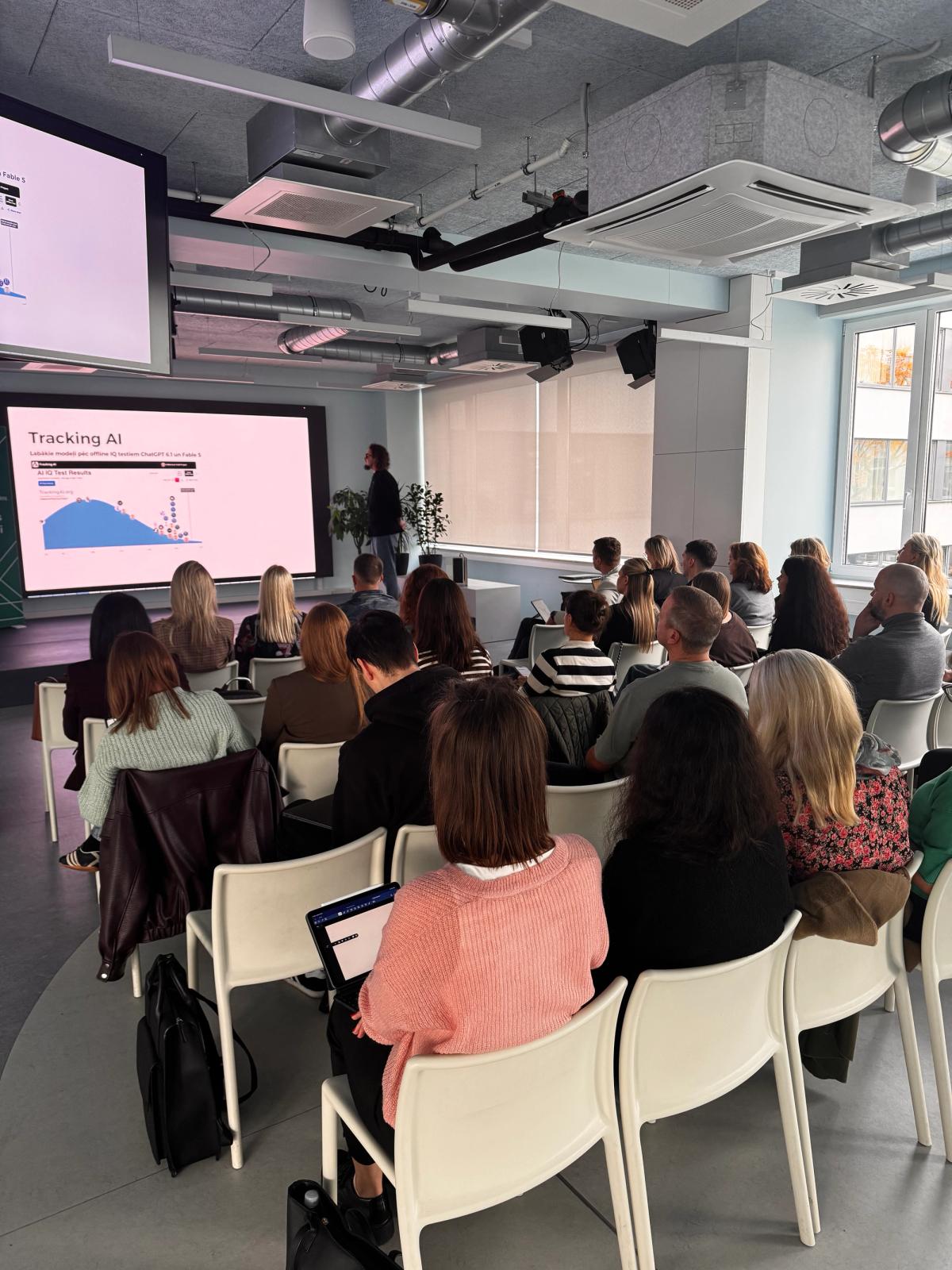
On October 12, the MILA-organized seminar “Education in the Age of AI: What is Changing and What Needs to Change?” took place in the RTU MOON hall in Riga. Experts and participants discussed the possibilities of AI in education and got to know solutions created in Latvia to support students, teachers and school management.
The seminar focused on learning mathematics in the era of AI, using educational data to understand students’ needs and plan support, digital solutions in teachers’ work and school management, and automating everyday processes.
The central question was how to use the possibilities of AI while maintaining and developing students' independent thinking. Practical experience stories allowed us to look at the role of technology in both the learning process and the daily work of the school.
One of the conclusions of the seminar is that valuable AI solutions for education have already been created in Latvia. The next step is to promote their mutual complementarity and integration into the systems used in educational institutions. This would help teachers and school management to use the possibilities of different solutions more conveniently in a unified work process.
MILA sees value in further conversation between solution developers and education decision-makers – the Ministry of Education and Science, municipal education administrations and education institution management. Presenting Latvian solutions and their collaboration opportunities would help evaluate ways to use them more widely in schools.
Thank you to the experts for their opinions, stories and practical examples, to the participants for their questions and involvement, and to RTU MOON for hosting!
Presentations sent to the participants of the seminar andShort feedback surveyWe invite participants to share their assessment and recommendations for further action.